Culture studies
Human cells in culture
T-cell markers and changing subsets make the immune connection tangible, as long as the culture dish stays in the picture.
Marrow precursors, 1980
Human bone-marrow precursor cells exposed to synthetic serum thymic factor acquired T-cell surface-marker expression and showed E-rosette formation in vitro. The paper uses the older name FTS for the thymic factor. Its outcome is T-cell-differentiating activity in culture.
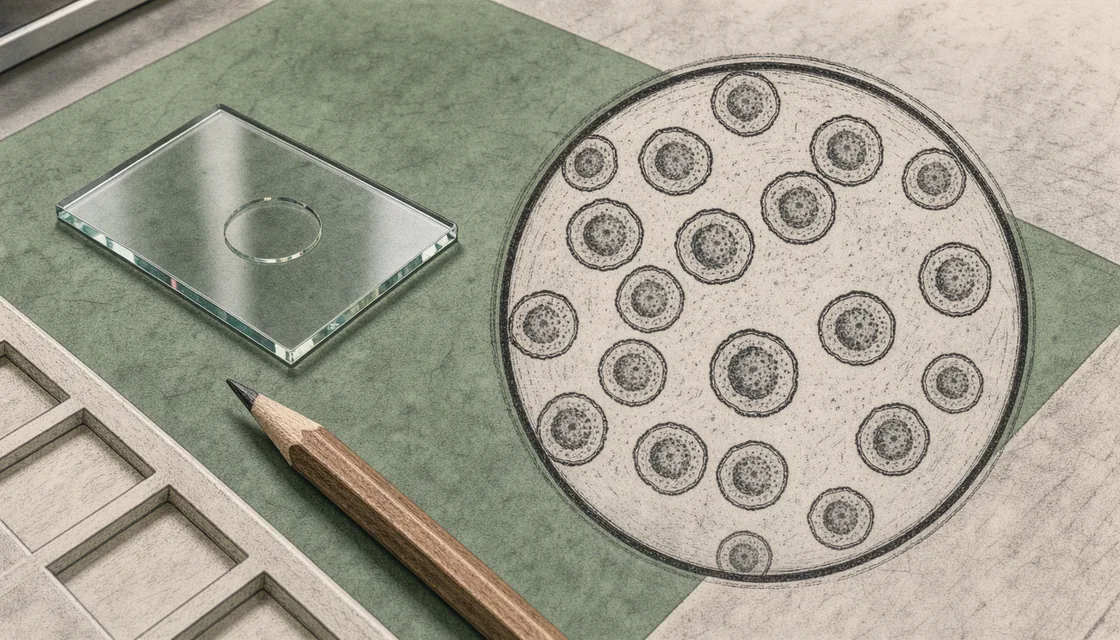
I can picture the address of this change: particular cells in a laboratory preparation, with particular features being measured. The markers give a more exact subject than the phrase ‘immune support’ ever could. They also set the limits of the observation: the experiment concerns human cells outside the body.
Autoimmune-disease samples, 1984
In lymphocytes from rheumatoid-arthritis and systemic-lupus-erythematosus patients, incubation with synthetic thymulin normalized abnormal T-cell subset markers in vitro. The disease names describe where the cells came from; the intervention and measurement took place in culture.
That distinction is easy to lose when a paper’s title contains a familiar illness. The response of those sampled cells is engrossing enough for me. The reported change concerns their markers; an account of clinical effects on arthritis or lupus would require patient outcomes.
Malnutrition samples, 1994
Lymphocytes from severely malnourished children were incubated with thymulin in another in vitro study. The treatment corrected T-lymphocyte immaturity and shifted the subpopulations toward a more mature phenotype—the pattern of features used to describe the cells.
This is a different starting condition from marrow precursors or autoimmune-disease samples. Set beside each other, the studies make the cells’ starting condition the obvious next subject for me. A comparison across those starting states would be fascinating; the existing papers examined their own specified preparations.
The human serum experiment brings the zinc question back into participants and their samples. Together, these studies give the connection between thymulin activity and immune-cell behaviour some texture, without requiring every change to mean the same thing.